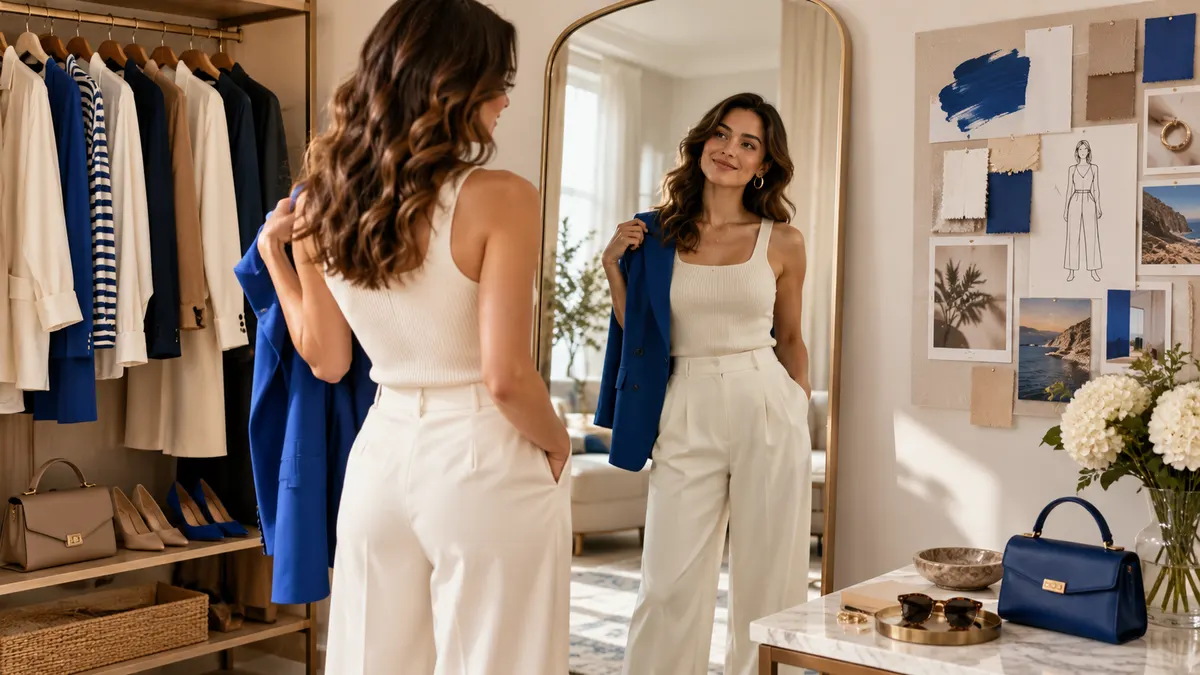
A celebrity match can be a useful style reference, but the best result does not come from copying another person exactly. It comes from noticing which parts of their presentation work with features you already share, then adapting those ideas to your life.
Start with the reason the match feels convincing
Look at the result and name the specific similarities. You might share a face outline, strong brows, deep-set eyes, a broad smile, or a similar balance between the forehead and jaw. Separate those structural traits from temporary choices such as hair color, makeup, beard shape, or camera angle.
This keeps the experiment realistic. A haircut can frame a face differently, but it cannot change bone structure. Clothing can repeat a celebrity's proportions, but it still needs to fit your body and the setting where you will wear it.
Build a reference board with patterns, not copies
Collect five to ten images of the celebrity in different settings. Include casual clothes, formal looks, close portraits, and candid photos. Then look for repeated decisions:
- Are the silhouettes fitted, relaxed, long, or cropped?
- Which two or three colors appear often?
- Is the hair usually sleek, textured, short, or face-framing?
- Are accessories minimal or a focal point?
- Does the styling emphasize the eyes, brows, lips, or jaw?
The role of a personal stylist is often less about buying one dramatic outfit and more about creating a coherent set of choices for a particular person. You can use the same principle on a smaller scale.
Find the style signature
Distinctive celebrity style usually comes from repetition rather than constant novelty. Look across your reference images and identify the small group of decisions that appear again and again:
- Silhouette: Is the overall shape fitted, relaxed, cropped, elongated, structured, or fluid?
- Palette: Does the person rely on neutrals, strong contrast, or one recurring accent color?
- Grooming: Which hair, brow, makeup, or facial-hair choices consistently frame the face?
- Accessories: Are glasses, hats, jewelry, shoes, or bags doing most of the visual work?
- Context: Which choices belong to everyday life, and which only make sense for a stage, set, or formal event?
Choose one or two patterns that fit your routine. Repeating a useful silhouette or color combination will produce a clearer personal style than buying several unrelated statement pieces. Consistency also makes it easier to tell whether an idea genuinely suits you.
Create a simple personal system from the evidence. Choose two reliable silhouettes, three base colors, one optional accent, and one grooming detail you enjoy maintaining. Test that system for a month before adding more. The aim is not to create a costume or personal brand. It is to make daily choices easier while keeping the parts of the reference that attracted you.
Translate each idea to your features
Suppose the celebrity often wears a middle part that shows the cheekbones. If your hair texture or growth pattern makes that awkward, use the underlying idea rather than the exact style. You could choose a softer part, pull volume away from the widest area of the face, or ask a stylist for a shape that opens the same area.
Do the same with clothing. A long monochrome outfit may create a clean vertical line. You can repeat that effect with pieces that fit your proportions, budget, climate, and dress code. The color does not need to be identical.
Makeup works best when translated by placement and intensity. Notice whether a reference uses a lifted outer eye, a defined brow, or a muted lip. Adapt the placement to your eye and face shape. Our celebrity-inspired makeup guide walks through that process.
Use costume thinking carefully
Costume design communicates character through silhouette, color, texture, and period. That is helpful when analyzing a public image, but everyday style has a different goal. You need to move, work, travel, and feel comfortable in it.
Choose one recognizable element for an ordinary day. It could be a jacket shape, glasses, a hairstyle, or a color pairing. Save a fuller interpretation for a party, performance, or photo session.
Translate a red carpet look into real life
Red carpet clothing is designed for strong lighting, professional photography, and a short public appearance. The garment may be borrowed, altered, and supported by a complete styling team. Treat the image as a design reference rather than a shopping list.
Start by describing its visual headline in one sentence. It might be a clean monochrome column, soft tailoring with one dramatic accessory, or a structured shape balanced by simple grooming. Then rebuild that idea in an order that controls cost and fit:
- Choose the main garment or coordinated separates.
- Check the silhouette and arrange alterations before buying accessories.
- Adapt the color and fabric to the lighting, weather, and formality of your event.
- Add shoes that work with the finished length and the amount of walking or standing required.
- Select one focal accessory instead of copying every detail.
- Test hair and makeup with the final neckline and lighting.
Try the complete outfit several days before the event. Sit, walk, use stairs, raise your arms, and take photographs from several angles. Comfort affects posture and expression, so a simpler outfit that fits well can look more polished than an elaborate copy that restricts movement.
For an ordinary occasion, lower the intensity while keeping the main idea. A dramatic train can become a long clean line. Heavy sparkle can become one textured piece. A fragile shoe can become a stable option in the same color family. The influence will still be visible without making the outfit impractical.
Test before making a big change
Try low-commitment versions first:
- Use a virtual or temporary color change before dyeing hair.
- Borrow or thrift a silhouette before buying an expensive version.
- Photograph the look in daylight and indoor light.
- Ask whether it still feels natural when you are not posing.
- Keep the parts that improve confidence and drop the parts that feel like a costume.
Keep a record of what works
Save a photo of each version in similar lighting and write down the change you tested. A simple note such as "softer part, stronger brow, navy instead of black" is enough. Comparing one change at a time makes it easier to see which idea improved the overall balance.
This record also prevents impulse purchases. Before buying something new, check whether it supports a pattern that already works in your wardrobe or grooming routine. If it only matches one reference photo, it may not earn a useful place in everyday life.
If you have not found a reference yet, try the celebrity look-alike finder with a clear, front-facing photo. Treat the result as a starting point rather than a rule.
The most convincing style is consistent with the person wearing it. Celebrity inspiration can help you see new options, but your comfort, culture, work, and preferences should make the final decision.